

Ladder Multi Position 26′ Type 1A
Call for Pricing
Related products

Please Read Before Using Any Rental Ladder
Ladders can cause serious injury if selected, positioned, or used improperly. Always inspect the ladder before use and follow all manufacturer labels, operating instructions, and applicable workplace safety requirements.
- Never exceed the ladder’s rated load capacity. Include the combined weight of the user, tools, equipment, and materials.
- Inspect the ladder before every use. Do not use a ladder that is bent, damaged, cracked, missing parts, or otherwise defective.
- Place the ladder on a stable, level, and secure surface.
- Make sure all hinges, locks, spreaders, braces, and adjustable sections are fully engaged before climbing.
- Ladder rungs and steps should be level and properly positioned when the ladder is in use. OSHA requires ladder rungs, cleats, and steps to be parallel, level, and uniformly spaced when positioned for use. [osha.gov]
- Do not exceed the manufacturer’s permitted standing level.
- Do not overreach. Reposition the ladder instead of leaning excessively to either side.
- Keep ladder steps, rungs, feet, and working surfaces free of oil, grease, mud, water, paint, and other slippery materials.
- Follow the manufacturer’s instructions when using extension, telescoping, articulating, or multi-position ladders.
- For non-self-supporting ladders, use the proper setup angle for the application. OSHA’s construction requirements address the positioning and safe use of portable ladders. [osha.gov]
- When a portable ladder is used to access an upper landing, applicable OSHA requirements must be followed for safe access and ladder positioning.
- Use extreme caution around electrical hazards. Select a ladder appropriate for the work environment.
- Do not move, reposition, extend, or adjust a ladder while someone is climbing or standing on it.
- Never modify a rental ladder or use makeshift extensions, boxes, pallets, or other objects to gain additional height.
- Keep doors, vehicles, equipment, pedestrians, and other jobsite hazards away from the ladder work area.
- Maintain safe climbing and working practices at all times.
OSHA’s construction ladder requirements are covered under 29 CFR 1926.1053, with additional training requirements under OSHA Subpart X
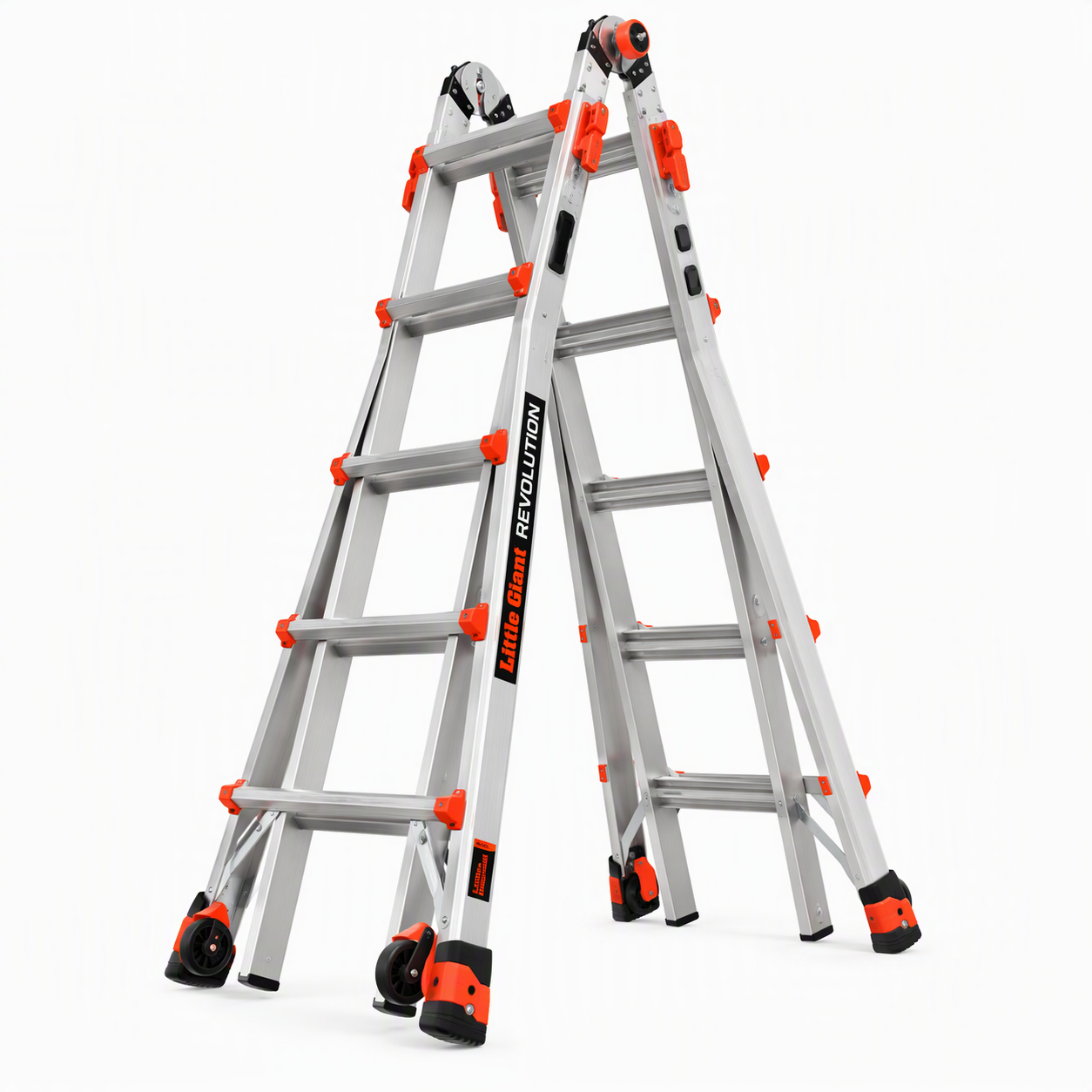
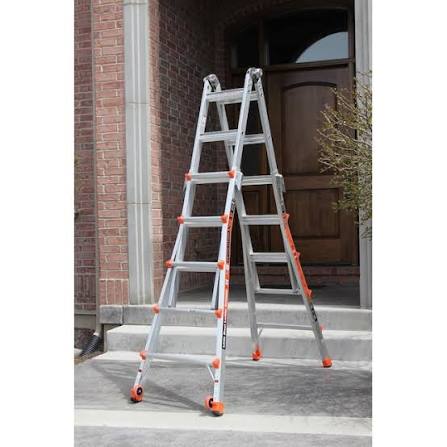
Little Giant Revolution Type IA Multi-Position Ladder
300 lb Capacity | Adjustable Aluminum Ladder | Service Rentals & Supplies Hawaiʻi
The Little Giant Revolution Type IA Multi-Position Ladder is a professional-grade adjustable ladder designed for contractors, maintenance crews, electricians, painters, facility teams, and homeowners who need one versatile ladder for multiple applications.
Its articulated, telescoping design allows the Revolution to be configured as an A-frame stepladder, extension ladder, staircase ladder, 90-degree ladder, and, with the appropriate accessories, a trestle-and-plank scaffolding system. Built from lightweight aluminum and rated Type IA for a 300 lb load capacity, the Revolution combines portability, strength, and flexibility for demanding residential, commercial, and industrial work.
Integrated Tip & Glide wheels make the ladder easier to move around jobsites, while adjustable locking components allow the height and configuration to be changed to match the work being performed.
Service Rentals & Supplies provides ladder and access-equipment rentals throughout Hawaiʻi, supporting customers on Oʻahu, Maui, Big Island, Kauaʻi, Molokaʻi, and Lānaʻi, including Honolulu, Kapolei, Pearl City, Kāneʻohe, Wailuku, Kahului, Lahaina, Kīhei, Kona, Hilo, Waimea, Līhuʻe, Kapaʻa, Poʻipū, Kaunakakai, and Lānaʻi City.
Whether you’re performing electrical work in Honolulu, building maintenance in Kapolei, painting in Kahului, working on a property in Kona, or handling repairs in Līhuʻe, the Little Giant Revolution provides a flexible elevated-access solution for a wide range of jobs.
Key Features
- Type IA 300 lb duty rating
- Multi-position articulated ladder
- Converts between A-frame, extension, staircase and 90-degree configurations
- Telescoping height adjustment
- Lightweight aluminum construction
- Wide-flared base design for stability
- Integrated Tip & Glide wheels for transportation
- Heavy-duty locking system for height adjustment
- Can be configured for trestle-and-plank applications with appropriate accessories
- Compact storage compared with carrying multiple conventional ladders
Typical Specifications
Little Giant Revolution Model 17
| Specification | Detail |
|---|---|
| Manufacturer | Little Giant Ladder Systems |
| Product Family | Revolution |
| Ladder Type | Multi-Position / Telescoping |
| Duty Rating | Type IA |
| Rated Capacity | 300 lbs |
| Material | Aluminum |
| A-Frame Adjustment | Approximately 4’–7′ |
| Extension Adjustment | Approximately 9’–15′ |
| Maximum Reach | Approximately 18′ |
| Base Width | Approximately 23″ |
| Base Spread | Approximately 37″ |
| Transport | Integrated Tip & Glide wheels |
| Configurations | A-frame, extension, staircase, 90-degree |
| Scaffold Capability | Trestle-and-plank with proper accessories |
Why Rent a Multi-Position Ladder?
One of the biggest advantages of the Little Giant Revolution is its ability to replace several conventional ladders on a job.
Instead of transporting separate step and extension ladders, crews can adjust one unit to accommodate different working heights and access conditions.
This makes the Revolution especially useful for:
- Contractors moving between multiple tasks
- Facility maintenance crews
- Commercial tenant improvement work
- Painting contractors
- Electrical contractors
- HVAC installers
- Property maintenance
- Residential renovation
Ideal Applications
- Interior and exterior painting
- Electrical installation and maintenance
- HVAC work
- Building maintenance
- Ceiling access
- Lighting installation
- Commercial renovations
- Residential remodeling
- Exterior repairs
- Facility maintenance
- General construction
- a {
text-decoration: none;
color: #464feb;
}
tr th, tr td {
border: 1px solid #e6e6e6;
}
tr th {
background-color: #f5f5f5;
}Please Read Before Using Any Rental Ladder
Ladders can cause serious injury if selected, positioned, or used improperly. Always inspect the ladder before use and follow all manufacturer labels, operating instructions, and applicable workplace safety requirements.
- Never exceed the ladder’s rated load capacity. Include the combined weight of the user, tools, equipment, and materials.
- Inspect the ladder before every use. Do not use a ladder that is bent, damaged, cracked, missing parts, or otherwise defective.
- Place the ladder on a stable, level, and secure surface.
- Make sure all hinges, locks, spreaders, braces, and adjustable sections are fully engaged before climbing.
- Ladder rungs and steps should be level and properly positioned when the ladder is in use. OSHA requires ladder rungs, cleats, and steps to be parallel, level, and uniformly spaced when positioned for use. [osha.gov]
- Do not exceed the manufacturer’s permitted standing level.
- Do not overreach. Reposition the ladder instead of leaning excessively to either side.
- Keep ladder steps, rungs, feet, and working surfaces free of oil, grease, mud, water, paint, and other slippery materials.
- Follow the manufacturer’s instructions when using extension, telescoping, articulating, or multi-position ladders.
- For non-self-supporting ladders, use the proper setup angle for the application. OSHA’s construction requirements address the positioning and safe use of portable ladders. [osha.gov]
- When a portable ladder is used to access an upper landing, applicable OSHA requirements must be followed for safe access and ladder positioning.
- Use extreme caution around electrical hazards. Select a ladder appropriate for the work environment.
- Do not move, reposition, extend, or adjust a ladder while someone is climbing or standing on it.
- Never modify a rental ladder or use makeshift extensions, boxes, pallets, or other objects to gain additional height.
- Keep doors, vehicles, equipment, pedestrians, and other jobsite hazards away from the ladder work area.
- Maintain safe climbing and working practices at all times.
OSHA’s construction ladder requirements are covered under 29 CFR 1926.1053, with additional training requirements under OSHA Subpart X
